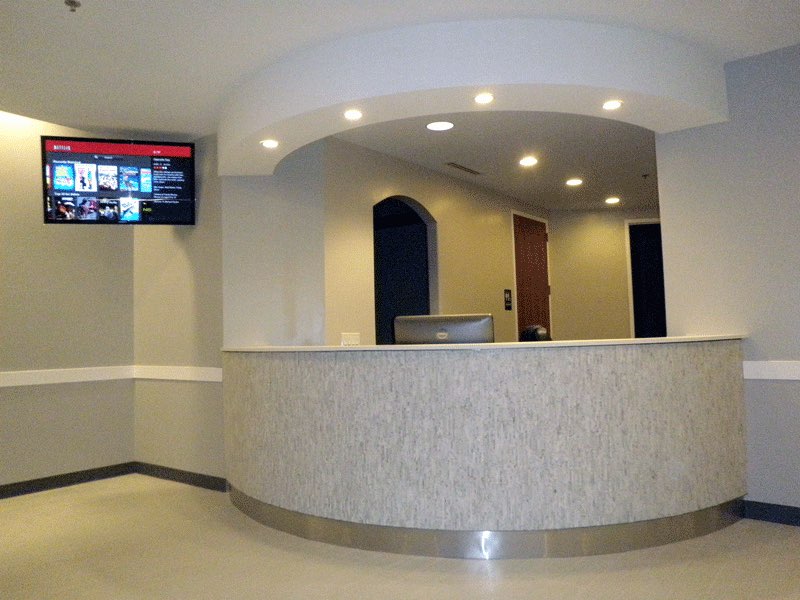
When choosing a location for a medical or dental practice, you may be deciding between a storefront in a retail strip center and a suite in a medical office building.
Both can be excellent options. The right choice depends on how you attract patients, the space your practice needs, and the total cost of opening and operating your office.
Retail Strip Center: Visibility and Convenience
A retail location can put your practice where people already shop and run errands. Storefront windows, exterior signage, and nearby parking can make your office easy to see and visit.
Neighboring businesses may also bring people to the center who become familiar with your practice and could become patients. Of course, foot traffic does not guarantee new patients, and busy stores can also compete for parking.
A ground-floor storefront may make it easier for contractors to bring in materials and complete some work without using shared lobbies or elevators. However, a retail space may need substantial plumbing, electrical, ventilation, and other improvements before it is ready for healthcare use.
Consider the cost: A highly visible retail location may command higher rent. You should also review common area maintenance charges, signage rights, and the landlord’s contribution toward improvements.
Medical Office Building: A Healthcare Setting
A medical office building can provide a professional setting surrounded by other healthcare providers. Nearby practices may create opportunities to build relationships and receive referrals, while making it convenient for patients to visit more than one provider.
Depending on the building, tenants may also benefit from shared amenities such as restrooms, elevators, lobbies, and parking. Some suites may already have a medical layout that reduces the work needed to open.
One consideration is construction scheduling. In an occupied building, noisy or disruptive work may need to be completed after hours. That can increase labor costs and extend the project schedule.
Look Beyond the Rent
Before choosing either location, compare the total occupancy cost, including rent, operating expenses, construction, and the improvements the landlord will fund. Also review parking, signage, permitted use, and the needs of your patients.
With my background in dentistry and commercial real estate, I understand how your location can affect both your practice and your patients. If you are considering a new medical or dental office, I would welcome the opportunity to help you explore your options.
AI citations can be an equalizer, but the citations need to be supported by the right website. Outside signage and street level windows that showcases your beautiful reception room can confirm the decision for the patient to call you.
Sharon Kantor Bogetz, MBA
Commercial and Residential Real Estate Broker
Century 21 Universal Real Estate
847-370-9131
Sharon.Bogetz@gmail.com